Why we built COMPASS ID
The world’s research is searchable by keyword, but not by what it covers or leaves uncovered. We built COMPASS to make the shape of knowledge, and its blank spaces, measurable.
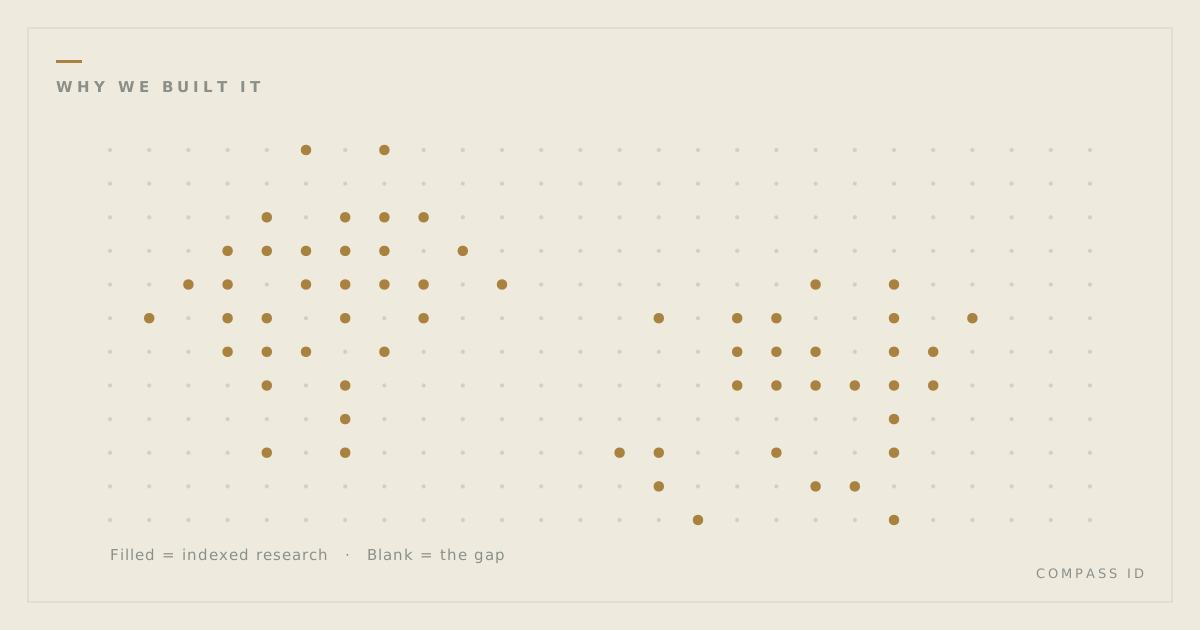
Search engines answer the question you already know to ask. They can’t tell you what an entire field has no indexed research on.
The problem: knowledge has a shape, and we couldn’t see it
Billions are spent every year synthesizing research for policy and funding decisions. Yet the basic questions, namely which species, regions, and problems are well-evidenced and which are dark, have no measured answer. Keyword search returns what exists; it is silent on what’s missing.
The thesis: measure the whole field, then measure the gaps
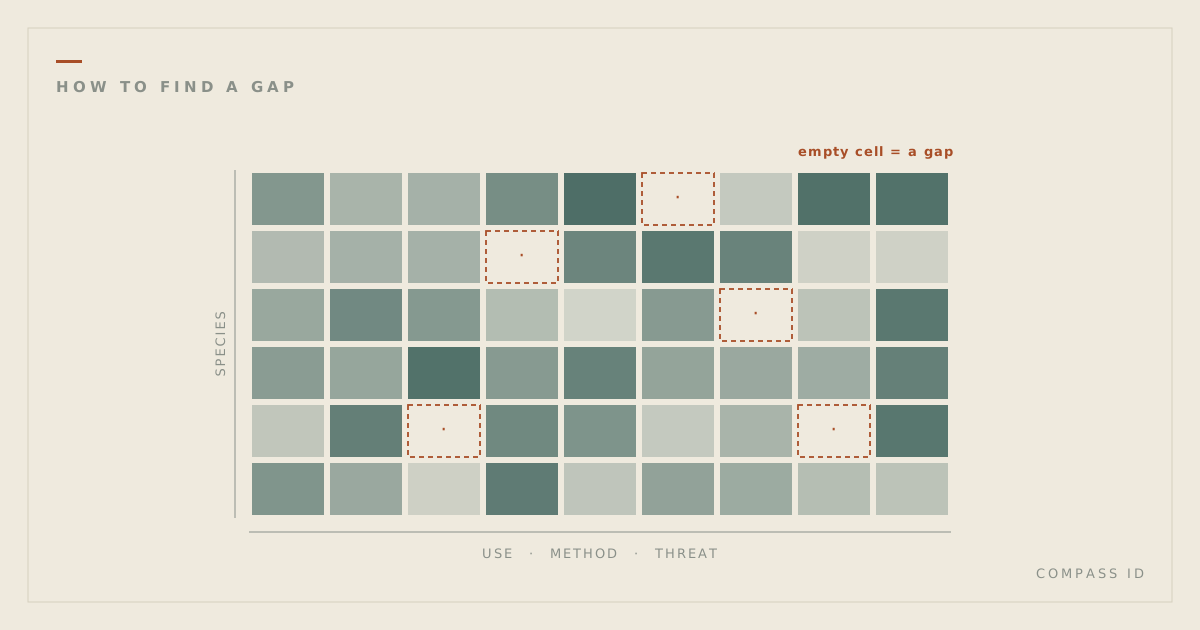
COMPASS takes the opposite approach to a filter. Instead of ranking a few “important” papers, it ingests the complete literature of a field and tags all of it. Completeness is the moat: only a corpus that leaves nothing out can tell you, honestly, what has been left out.
We hold ourselves to one rule above all others: measure, don’t claim. Every gap we report is backed by a tagged, auditable corpus, and every accuracy figure is measured on gold data.
What it revealed
The first atlases surfaced a pattern that keeps recurring: research is often anti-correlated with need. The rarest species are the least studied; the most degraded drylands attract the least fieldwork. That misallocation is invisible to keyword search, and visible and quantifiable in COMPASS.