What is COMPASS ID?
COMPASS reads an entire field of research, tags every study across dozens of dimensions, and maps what the science covers, and the vast gaps it has left dark.
Most research is searchable by keyword. COMPASS ID makes it searchable by what it covers, and, just as importantly, by what it leaves uncovered.
A tagged, complete corpus, not a search box
COMPASS reads an entire field of research end to end: every indexed study on a plant family, a region, or a theme. It then uses AI to tag each study across dozens of structured dimensions: the species and ecosystems it studies, where the fieldwork happened, the methods it used, the threats and interventions it addresses, the policy frameworks it touches.
Every tag is gated three ways: it must belong to a fixed vocabulary, it must be grounded in evidence in the paper’s own text, and a second AI model must confirm it where that model returns a verdict. Accuracy is measured against a model-built reference set rather than assumed; a human-annotated set is planned.
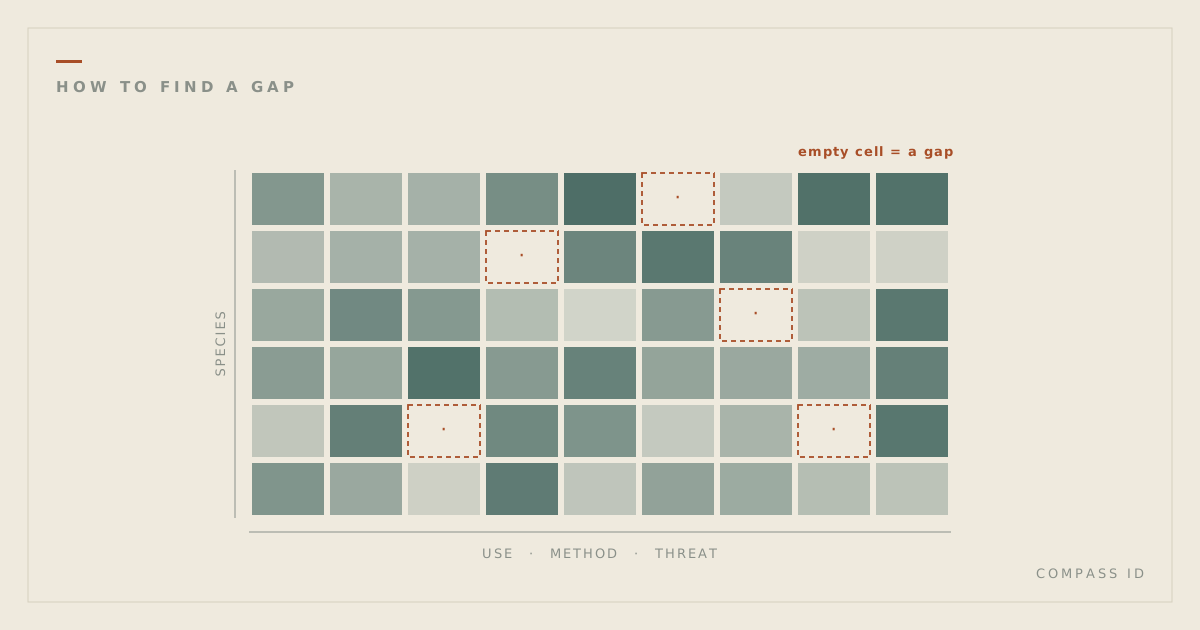
The blank spaces are the point
Because the corpus is complete and consistently tagged, the gaps become visible and countable. A blank region on a COMPASS map means no indexed study found there. That is never proof that none exists, but it is a measurable shortfall in the record.
Two things you can do with it
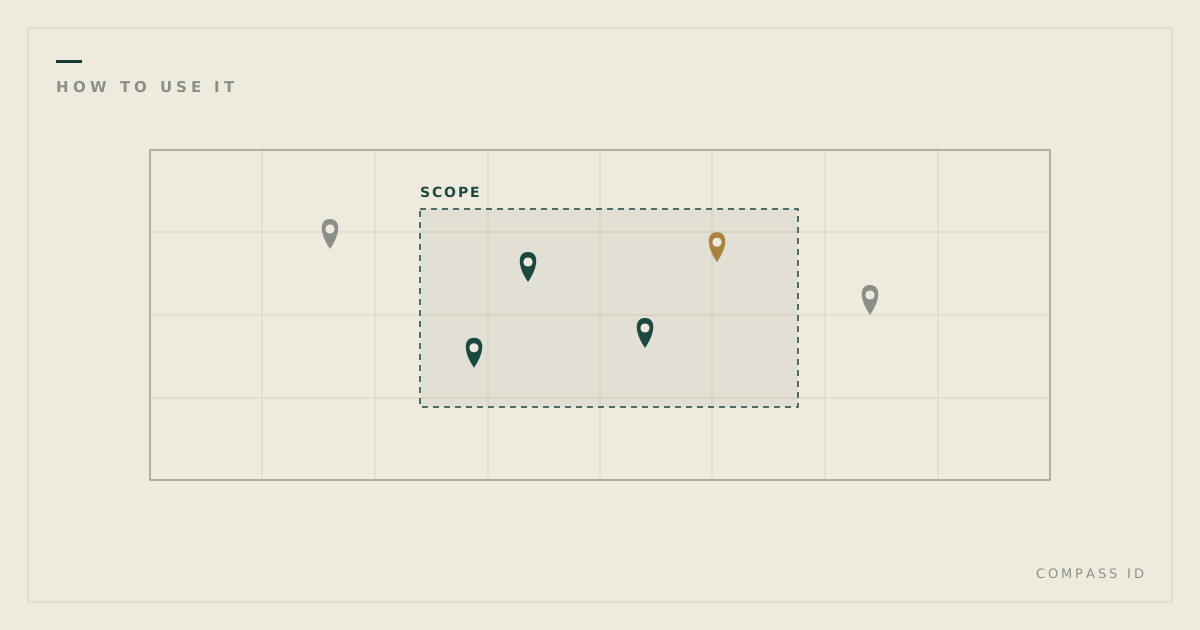
- Read the evidence. Each field becomes an interactive evidence atlas and a long-form report: filter the studies, map the fieldwork, and see the gaps for yourself.
- Build your identity. Researchers and organizations can create a COMPASS ID that connects their work to the frameworks, regions, and species it advances.